proof of pregnancy letter from doctor pdf

proof of pregnancy letter from doctor pdf
What is a Proof of Pregnancy Letter from a Doctor?
A doctor’s letter serves as official documentation confirming a pregnancy, often requested by employers or insurance providers.
It streamlines processes related to maternity benefits and healthcare access, utilizing a PDF format for easy sharing.
Definition and Purpose
A proof of pregnancy letter from a doctor, typically delivered as a PDF, is a formal document verifying that a patient is expecting. This letter isn’t a standard medical report, but a specific request-driven confirmation. Its primary purpose is to provide official evidence of pregnancy to third parties.
These parties often include employers when initiating maternity leave, insurance companies for coverage verification, or government agencies for assistance programs. The letter acts as a concise, verifiable record, often including key details like the estimated due date. It’s designed to simplify administrative processes and ensure expectant mothers receive the support and benefits they are entitled to, offering a readily accessible and official confirmation of their pregnancy status.
When is a Doctor’s Letter Required?
A doctor’s letter confirming pregnancy, often in PDF format, is frequently needed when requesting maternity leave from an employer; Employers may require it to assess workplace risks and implement necessary accommodations for the expectant mother.
Insurance providers often request this documentation to verify eligibility for pregnancy-related coverage. Furthermore, individuals applying for government assistance programs designed for pregnant women and new mothers may need to submit a letter as proof. It’s also useful when needing to confirm pregnancy for pre-admission hospital forms or state health records. Essentially, any situation requiring official verification of pregnancy status necessitates this letter.

Essential Components of a Proof of Pregnancy Letter (PDF)
Key elements include patient details, the last menstrual period date, estimated due date, confirmed test results, and the doctor’s official contact information and signature.
Patient Information
This section meticulously details the expectant mother’s identifying information. Typically, a proof of pregnancy letter, formatted as a PDF, will include the patient’s full legal name, date of birth, and current address. Accurate contact details, such as a phone number and email address, are also essential for verification purposes.
Furthermore, some letters may incorporate the patient’s medical record number or insurance identification number to facilitate seamless communication and claims processing. Ensuring this information is precise is paramount, as discrepancies can lead to delays in accessing benefits or healthcare services. The clarity and completeness of patient information are foundational to the letter’s validity and usability.
Date of Last Menstrual Period (LMP)
The Date of Last Menstrual Period (LMP) is a crucial piece of information within a proof of pregnancy letter, typically presented in a PDF format. This date serves as a primary reference point for calculating the gestational age and estimating the expected due date.
Healthcare providers rely on the LMP to accurately assess the stage of pregnancy and monitor fetal development. It’s usually documented in a standard date format (MM/DD/YYYY). Providing an accurate LMP is vital, as it directly impacts the precision of subsequent calculations and medical care. This detail ensures consistent tracking throughout the pregnancy journey.
Estimated Due Date
The Estimated Due Date (EDD) is a key component of a proof of pregnancy letter, commonly delivered as a PDF document. Calculated based on the Last Menstrual Period (LMP) and confirmed through medical assessment, the EDD provides an anticipated timeframe for delivery.
While not an exact science, the EDD is essential for planning prenatal care, monitoring fetal development, and preparing for childbirth. It’s typically expressed in a standard date format (MM/DD/YYYY). This date assists in scheduling appointments and understanding the progression of the pregnancy, offering a crucial benchmark for both the patient and healthcare provider.
Confirmation of Pregnancy – Test Results
A crucial element within the proof of pregnancy letter (PDF) is the explicit confirmation of pregnancy, supported by test results. This section details the method used for confirmation – typically a urine or blood test – and the outcome.
The letter may state “pregnancy confirmed” or include specific hCG (human chorionic gonadotropin) levels, indicating a positive result. While a positive home pregnancy test can be a preliminary indicator, the doctor’s confirmation provides official medical validation. This section assures third parties, like employers or insurance companies, of the pregnancy’s legitimacy, facilitating access to relevant benefits and accommodations.
Doctor’s Contact Information & Signature
The proof of pregnancy letter (PDF) must include complete contact details for the healthcare provider issuing the document. This typically encompasses the doctor’s full name, medical title, clinic name, physical address, phone number, and email address.
Providing this information allows third parties – such as employers or insurance adjusters – to verify the letter’s authenticity and contact the doctor directly if clarification is needed. Critically, the letter requires the doctor’s original signature, demonstrating their professional responsibility and validating the document’s official status. A digital signature may also be acceptable, adhering to legal standards for electronic medical records.

Obtaining a Proof of Pregnancy Letter
Secure the letter by scheduling an appointment with your healthcare provider and specifically requesting this documentation. Expect a brief turnaround time for processing and delivery.
Scheduling an Appointment
To begin, contact your doctor’s office or clinic to schedule an appointment. You can typically do this online through a patient portal, or by calling their reception desk directly. When booking, briefly mention you require a letter confirming your pregnancy; this allows the staff to allocate sufficient time during your visit.
Be prepared to provide standard patient information, such as your name, date of birth, and insurance details. If you are a new patient, you may need to complete new patient paperwork beforehand. Consider asking if a telehealth appointment is an option if an in-person visit isn’t immediately necessary, though a physical exam might be required for confirmation.
Confirm the appointment details, including the date, time, and location, and any pre-appointment instructions.
Requesting the Letter
During your appointment, explicitly request the “proof of pregnancy” letter from your doctor. Clearly state the purpose for which you need the letter – whether it’s for maternity leave, insurance coverage, or government assistance. This helps the doctor include all necessary information.
Specify if you require the letter in a specific format, most commonly a PDF, for easy electronic submission. Ask about any associated fees for providing the documentation. Don’t hesitate to inquire about the details that will be included, such as your LMP, estimated due date, and confirmation of pregnancy results.
Confirm the doctor understands your request and where/how you will receive the completed letter.
Turnaround Time
The time it takes to receive your proof of pregnancy letter can vary. Generally, allow 2-3 business days for processing, though this depends on your doctor’s office workload and administrative procedures. Some clinics may provide the letter immediately during your appointment if they have a template readily available.
If you need the letter urgently, communicate this to the office staff when making your request. Inquire about the fastest way to receive it – whether it’s via email (securely), patient portal access, or physical pickup.
Follow up politely if you haven’t received the letter within the expected timeframe.

PDF Format and Accessibility
PDFs ensure consistent formatting and are widely accepted. They’re easily printable, shareable, and can be made fillable for convenient completion of related forms.
Benefits of PDF Format
The PDF format offers several key advantages when it comes to a proof of pregnancy letter. Primarily, it preserves the document’s original formatting across different devices and operating systems, ensuring the recipient receives it exactly as intended. This consistency is crucial for official documentation.
Furthermore, PDFs are universally compatible and easily shareable via email or online portals. They are also relatively secure, preventing unauthorized alterations to the sensitive medical information contained within.
Importantly, PDFs are readily printable without formatting issues, a necessity for submitting physical copies to employers or insurance companies. Many PDF editors also allow for digital signatures, adding an extra layer of authenticity and streamlining the process. The widespread availability of free PDF readers makes access simple for all parties involved.
Ensuring PDF is Printable and Fillable
To maximize usability, a proof of pregnancy PDF should be both printable and, ideally, fillable. When creating the document, ensure margins are adequate for printing without content being cut off. Utilize a standard font size and avoid complex graphics that might hinder readability when printed;
For fillable forms, employing a PDF editor allows for the inclusion of text fields where relevant information can be digitally entered. This streamlines the process for both the healthcare provider and the patient.
Testing the PDF’s printability and fillability before distribution is crucial; Confirm that all fields are clearly visible and functional, and that the printed version accurately reflects the digital document. Accessibility features, like tagged PDFs, can further enhance usability for individuals using assistive technologies.

Legal and Official Considerations
Doctors have a responsibility to maintain patient confidentiality when issuing a proof of pregnancy letter, and acceptance varies by employer and insurance policies.
Doctor’s Responsibility and Liability
Healthcare providers issuing a proof of pregnancy letter bear the responsibility of ensuring accuracy and adherence to patient privacy regulations, like HIPAA.
The letter must accurately reflect the confirmed pregnancy status and estimated due date, based on clinical findings.
Liability arises from inaccurate information or unauthorized disclosure of protected health information.
Doctors should only include essential details – patient name, LMP, due date, and confirmation of pregnancy – avoiding unnecessary medical history.
Maintaining clear documentation of the pregnancy confirmation, including test results or ultrasound findings, is crucial for legal protection.
Providers must also be aware of state-specific laws regarding pregnancy documentation and employee rights, ensuring compliance with all applicable regulations.
Acceptance by Third Parties (Employers, Insurance)
Acceptance of a proof of pregnancy letter varies among employers and insurance companies, though a doctor’s letter is generally well-received.
Employers often require it to process maternity leave requests and assess workplace safety for expectant mothers.
Insurance providers typically accept these letters to verify pregnancy for coverage of prenatal care, delivery, and related medical expenses.
However, some may request additional documentation, like ultrasound results or positive pregnancy test confirmations.
A PDF format ensures easy submission and verification.
It’s advisable to confirm specific requirements with each entity beforehand to avoid delays in processing benefits or leave requests, ensuring a smooth experience.

Alternatives to a Doctor’s Letter
Ultrasound results, positive pregnancy tests, or a confirmation of pregnancy form from your healthcare provider can sometimes substitute a doctor’s letter for verification purposes.
Ultrasound Results
Ultrasound reports offer visual confirmation of pregnancy, often detailing gestational age and fetal development. While highly reliable, acceptance as proof may vary depending on the requesting party.
Unlike a dedicated letter, ultrasound results typically aren’t specifically formatted for administrative purposes; they are medical imaging reports. Therefore, they might require supplemental explanation or translation for non-medical personnel.
To utilize an ultrasound report effectively, ensure it clearly displays the date of the scan, the gestational age, and the radiologist’s or technician’s signature. Some entities may request a letter from the doctor alongside the ultrasound to validate the findings and provide a professional medical opinion.
Consider the context; for instance, insurance companies might readily accept an ultrasound report, while employers may prefer a formal letter.
Positive Pregnancy Test Results (with limitations)
While a positive home pregnancy test is a strong indicator, it often isn’t sufficient as official proof for legal or administrative purposes. These tests detect the presence of hCG, but don’t confirm gestational age or viability.
Limitations arise from potential false positives or the inability to determine if the pregnancy is progressing normally. Employers and insurance providers generally require more definitive documentation.
To strengthen the validity, a positive test result can be submitted with a doctor’s letter or ultrasound report; The letter provides professional verification and contextualizes the test result.
Always check specific requirements; some entities may explicitly reject home test results, emphasizing the need for medical confirmation from a qualified healthcare provider.
Confirmation of Pregnancy Form (from Healthcare Provider)
Many healthcare providers offer a dedicated “Confirmation of Pregnancy” form as an alternative to a formal letter. These forms are pre-structured, streamlining the documentation process for both patient and provider.
Typically, these forms request essential details like patient information, the date of the last menstrual period (LMP), and the estimated due date. They often include space for the doctor’s signature and contact information.
These forms are readily accepted by many insurance companies and employers, offering a convenient and standardized method of verification.
PDF versions are commonly available for easy completion and submission, mirroring the functionality of a traditional doctor’s letter, and ensuring accessibility for all parties involved.

Using the Letter for Specific Purposes
This letter facilitates maternity leave requests, insurance claim submissions, and applications for government assistance programs, providing official verification of pregnancy status via PDF.
Maternity Leave Requests
A proof of pregnancy letter, often in PDF format, is a crucial document when initiating a maternity leave request with your employer. It formally notifies them of your pregnancy and provides a projected timeline for your leave, based on the estimated due date stated within the letter.
Employers frequently require this documentation to assess workplace adjustments, plan for coverage during your absence, and ensure compliance with relevant labor laws. The letter serves as official verification, supporting your request and facilitating a smooth transition.
Including this letter with your formal leave request demonstrates professionalism and provides the necessary medical confirmation for a successful outcome, streamlining the administrative process for both parties involved. It’s a key component in securing your rights as an expectant mother.
Insurance Coverage
A doctor’s proof of pregnancy letter, typically a PDF, is often required by insurance companies to verify eligibility for maternity benefits and coverage. This documentation confirms your pregnant status, enabling you to access prenatal care, delivery services, and postpartum support as outlined in your insurance plan.
Insurance providers utilize this letter to process claims accurately and ensure appropriate coverage levels are applied. It may be necessary when initiating claims for prenatal appointments, ultrasounds, or hospital stays related to the pregnancy.
Having a readily available PDF version simplifies the submission process, allowing for quick and efficient verification of your pregnancy by the insurance company, ultimately facilitating access to essential healthcare services.
Government Assistance Programs
A doctor-issued proof of pregnancy letter, often in PDF format, is frequently a necessary document when applying for various government assistance programs designed to support expectant mothers and families. These programs aim to provide resources like nutritional support, healthcare access, and financial aid during pregnancy and after childbirth.
Specific programs, such as WIC (Women, Infants, and Children) or state-level Medicaid expansions, often require official verification of pregnancy as part of the eligibility criteria. The letter serves as concrete evidence of your status, streamlining the application process.
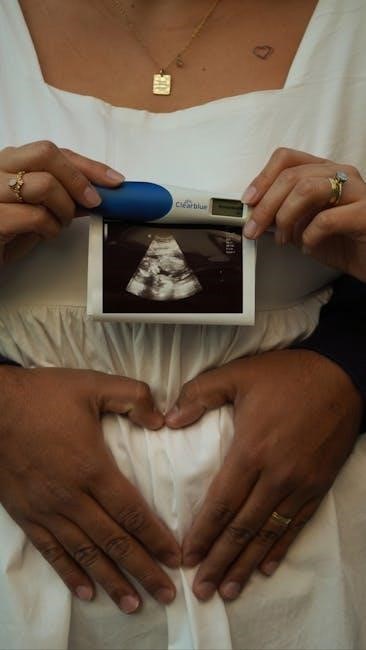
A PDF version ensures easy submission and record-keeping, facilitating a smoother experience when accessing these vital government resources.